
Pavilion
SUBMISSIONS OPEN JANUARY 19TH!

Learning, (un)learning, and (re)learning 

October7-9Bogotá CO

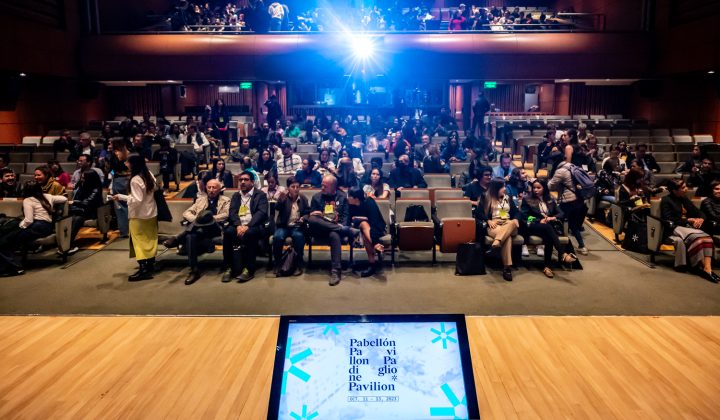
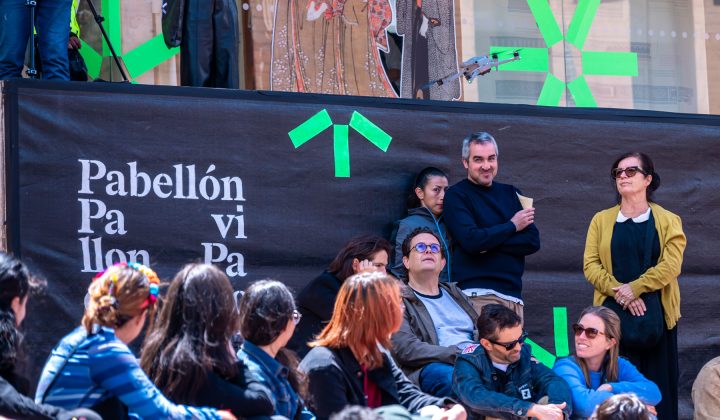
ARQDIS Pavilion is an international event based in Bogotá, Colombia, conceived to share creation and practice-based research in design and architecture. The event is open to anyone interested in design, architecture, art, the humanities and creative practices. During three days, the event will offer exhibitions, lectures by national and international keynotes, performances, showcases and activities that aim to strengthen the creative ecosystem of these fields. 

The open call to submit projects for Pabellón 2026 opens on January 19 and closes on March 27. To apply, please carefully review the open call document and the specific guidelines for each category.

Submission Formats

Exhibit

About

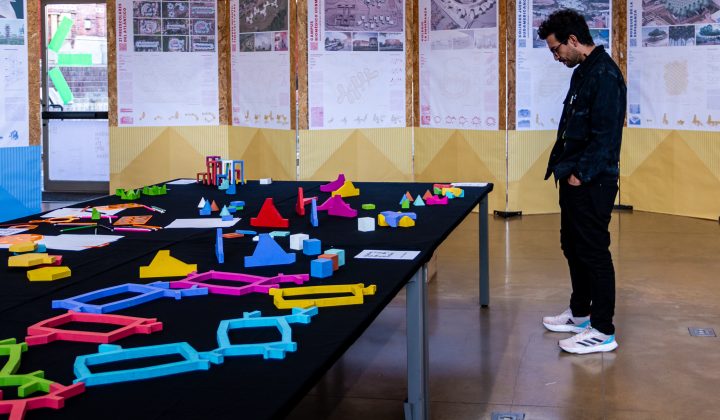
Exhibit is the category in which practices, processes and products susceptible of being exhibited are displayed. The exhibition seeks that the pieces be self-contained, that they speak for themselves, that they have formal and/or functional characteristics that give them didactic and expository potential.

Proposals are expected to include prototypes, records of processes or finished pieces that include experimentations and creative explorations capable of transcending the limits of traditional media, from the visual, sound or haptic. They are the result of research, technical explorations, interpretation of concepts or communicative proposals that materialize ongoing or completed projects.

Read more

Exhibiting is a practice inherent to the act of designing. Its supports arouse significant experiences in those who visit them, beyond contemplation, through suggestive resources and interactions that involve different senses. In addition, the objects and devices exhibited together form a place, either physical or digital, that enhances synergies and generates approaches to processes, practices and products in an alternative way to traditional academic formats of dissemination. Exhibiting allows reaching more plural audiences.

Formats

  • Graphics

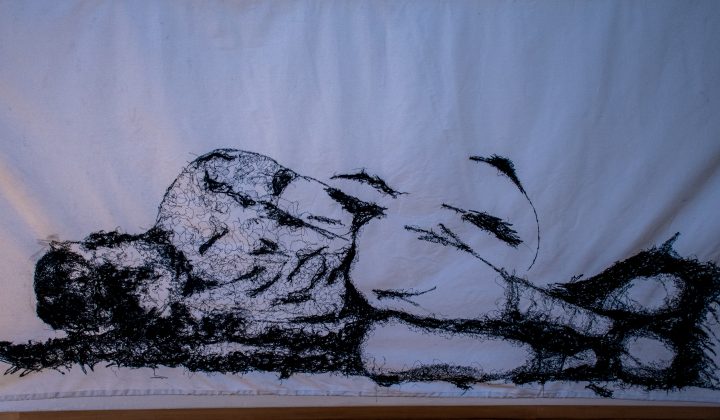
    Two-dimensional printed or embossed works that cover a wide range of formats, from the miniscule (like stamps) to the monumental (like large format prints) on different surfaces.

    Examples include: illustrations, photographic series, plans, maps, diagrams, archival material, murals, diagrams, etc.

  • Interactive experiences

    Analog or digital pieces with an experiential value that involves user participation in some kind of action or gesture, generating an active experience and emphasizing the connection between the user and the piece.

    Some examples can be: web projects, installations, interactive devices, apps, games, augmented, virtual and extended reality experiences, Artificial Intelligence (AI) and Machine Learning (ML) etc.

  • Audiovisuals

    Pieces that have diverse, hybrid and experimental characteristics, that use audiovisual languages as their main medium and that, due to their expressive, plastic, explanatory or non-traditional narrative character, are directed towards a sensitive and/or aesthetic experience, pertinent to be exhibited within a multi-format exhibition. Pieces to be reproduced on screens, video-projectors, headphones or loudspeakers.

    Examples include: video-scenarios, project videos, simulations, video-art, projections, mappings, explanatory animations, etc.

  • Objects

    Three-dimensional artifacts that use their materiality to express a concept, an exploration, a reflection or a solution and are part of the development of research, a project or a creative process.

    Some examples are: products, prototypes, models, mock-ups, material experimentations, machines, apparatuses, utensils, devices, etc.

Submission Details

All submissions are processed through Pavilion’s submission platform.

The call is open to anyone who wants to apply free of charge. However, authors whose work is selected will have to pay for the event registration. These selected projects will be published in the event’s proceedings.

Please consult the full submission requirements of this format in the attached document below:

Submission Guidelines

Academic Assessment

The Exhibit category chairpersons will nominate a group of national and international experts in the areas of each of the four subcategories. The peers selected by Pavilion’s organizing committee will blindly review the pre-selected proposals. Exhibit chairpersons will have the power to reject or accept external peers’ recommendations, depending on the discussions that will take place during Pavilion’s preparatory phase.

Format Committee

Perform

About

The term ‘perform’ brings to mind those exceptional events that occur on a stage, in front of an audience. Based on this idea, Pabellón seeks to extend the terms work, staging and performance, to understand that to perform is to transform: the surprising ability we have as creators to generate change in our environment, turning it into something it is not ordinarily.

We define, then, a performance as any set of actions, or acts of change and transformation, constructed through a multi-stage process that: observes, frames, prepares, rehearses, and enhances. Under this lens, any event, action or behavior can be performed, and to that extent traced according to the various processes involved in its creation.

Read more

In this way, we invite students, architects, designers, artists, collectives, and creators to review their practices, from the actions, processes and critical stances that inquire into the transformative place that exists when something is performative: it originates, changes, is celebrated and ends in situ.

“The strategic project is in the attempt to go beyond the designed objects. The scale of the project is not in the dimension of the work, but in the relationships it is capable of exploding.” —Manuel de Solà-Morales, De Cosas Urbanas

Performar is born as a space in which students, architects, designers, artists, collectives, can create strategies that promote interventions and ephemeral situations, or as Manuel de Solà Morales puts it, that have the potential to explode relationships of people and artifacts in specific places.

Going beyond designed objects implies taking a critical stance towards processes and performances, understanding such scenarios in their multiplicity and diversity as a fundamental part of the state of the art in architecture and design.

Formats

  • Performed actions

    This format proposes the creation and development of staged performances presented live in the spaces and times of Pavilion, whose dialogues and actions enrich the practice of architecture and design, in order to: Entertain, Create something beautiful, Teach, Persuade, Convince, Define or transform identity, Create or host community, Heal.

  • Site-specific

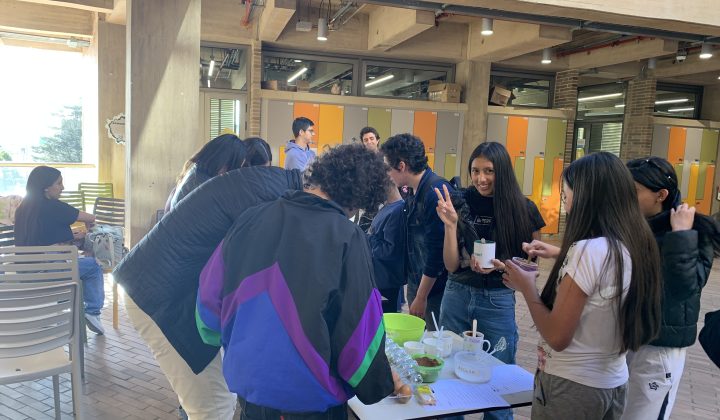
    This format proposes the creation and development of physical interventions in specific contexts, where architecture and design are articulated from the recognition of the characteristics and needs of a specific environment. They will be developed in spaces close to the campus, according to its characteristics and needs.

Submission Details

All submissions are processed through Pavilion’s submission platform.

The call is open to anyone who wants to apply free of charge. However, authors whose work is selected will have to pay for the event registration. These selected projects will be published in the event’s proceedings.

Please consult the full submission requirements of this format in the attached document below:

Submission Guidelines

Format Committee

Transmedia

About

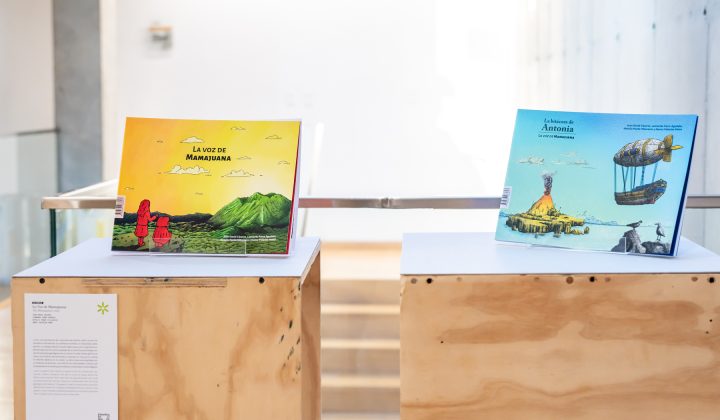
The transMedia category refers to and summons exploratory works and design processes with a narrative focus; that question, reinforce, invent or disarticulate narratives. transMedia is a transversal category that arises from the multiple questions that emerge during a design process and that obey a clear communicative intention rather than being simply illustrative or arising from a whim. transMedia participates in communicative actions where the different stages of the work are enriched from individual or collective experiences. We are looking for proposals that question the media, the motives and the audiences.

This category includes transmedia proposals of diverse combinations —related to creative research processes as well as productions that overflow the scope of the format itself— in design processes that are varied and strongly argumented.

Read more

In his book Convergence Culture, Henry Jenkins describes transmedia storytelling as a way of telling stories across multiple media, platforms and formats. Transmedia is a way of storytelling, beyond the diversity of media, to grow and reverberate a story, integrating the expressive capabilities of each medium.

Transmedia allows to create networks and connections between people, ideas, artifacts, and spatialities that are situated and evoked. In a way, storytelling, in all its forms, implies a two-way interaction between storyteller and audience, in some cases direct and close. Narration does not create an imaginary barrier between the work and the audience; on the contrary, it is a portal of exchange between both worlds. Transmedia projects are multidirectional and appeal to the emotions of those who experience them, since it is through them that the narrative can be interpreted and connected with, so that communication is more effective, sensitive and direct. Good narratives, beyond the intention of creating a sense of connection, generate trust, and encourage the audience to enter the story where they are, promoting situations of openness.

Transmedia thus becomes a fundamental issue in the current discussions within Design and Architecture. It involves key discussions about media, motives and audiences and the role of constructed narratives, or their absence, in the different stages of our processes in these disciplines.

Formats

  • Open format

    The Transmedia category accepts proposals in any media, as long as their intent and argumentation reflect the purpose of the category.

Submission Details

All submissions are processed through Pavilion’s submission platform.

The call is open to anyone who wants to apply free of charge. However, authors whose work is selected will have to pay for the event registration. These selected projects will be published in the event’s proceedings.

Please consult the full submission requirements of this format in the attached document below:

Submission Guidelines

Academic Assessment

The general acceptance criteria are based on quality, innovation, contributions and relevance of the proposal. The proposals should address the scope and interest of the fields of Architecture and Design.

Format Committee

Present

About

Presenting refers to the action of communicating verbally, visually and in writing the explorations, results or conclusions of a research or project. Within Present we will have two formats: papers and pictorials, both formats will be taken into account for oral presentation. The evaluation criteria for the proposals are relevance, novelty, research or project quality, methodological soundness and contribution to the disciplines of architecture, design or any of their intersections. Speakers whose proposals have outstanding peer review evaluations will have the opportunity to write an article for publication in the event’s book.

Tracks

  • Resilient communities and habitats

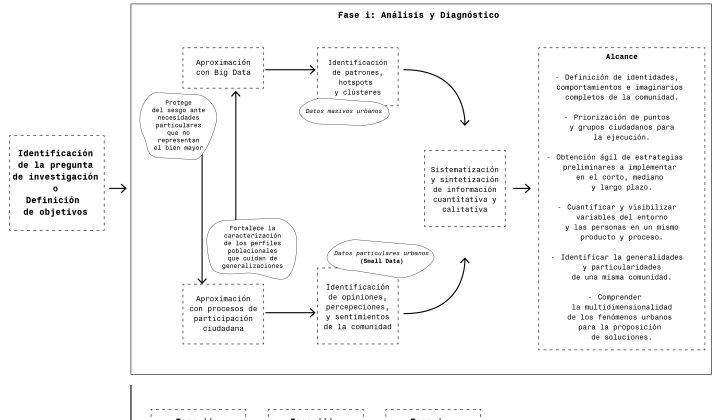
    This track seeks to include research from design, architecture and their intersections that investigates how to understand, analyze, and build better conditions for vulnerable communities in adverse environments, or communities facing complex challenges to integrate with their habitat.

  • Digital spatialities

    This track seeks to include research from design, architecture and their intersections that investigates how the use of technology creates opportunities for modification and reconfiguration of the spaces we inhabit.

  • Deconstructing and constructing knowledge

    This track seeks to include research regarding disciplinary and transdisciplinary questions and debates that refer to the way we learn, teach and review the construction of knowledge in the disciplines. Additionally, it includes research that, through technological explorations, derives theoretical developments or contributions to the work and practice of related disciplines and their future.

  • Agency and decentralized doing

    This track seeks to include research that focuses on rethinking the agency of users and recipients of design and architecture, as well as how this debate may influence a reassessment of the methodologies used in these disciplines and the roles they are called to fulfill in the process of intervening spaces, products and people’s experiences.

  • Materialities

    This track seeks to include research focused on the development, exploration and experimentation around materiality in the processes of construction, production and creation of architectural projects and product design.

Formats

  • Extended abstract

    Extended abstracts may contain information on ongoing or completed research or projects. This format should be between 1,500 and 2,000 words, excluding the abstract, references and captions. Authors should address one of the subtopics, demonstrating a high degree of academic knowledge or practical relevance. Extended abstracts should clearly articulate the research topic, provide a concise synthesis of the research context, describe the methods used to conduct the research, present the research results, and summarize the contribution to the field.

  • Pictorial

    Pictorials are articles in which visual components (e.g., diagrams, sketches, illustrations, renderings, photographs, annotated photographs, and collages) play a key role in conveying ideas and research contributions in addition to the accompanying text. Pictorials harness the power of visual communication with the effective use of visual languages and high quality images. They can be practical, theoretical or both.

Submission Details

All submissions are processed through Pavilion’s submission platform.

The call is open to anyone who wants to apply free of charge. However, authors whose work is selected will have to pay for the event registration. These selected projects will be published in the event’s proceedings.

Please consult the full submission requirements of this format in the attached document below:

Submission Guidelines

Academic Assessment

Each submission will be reviewed in an anonymous peer review process (double blinded). To this end, it is very important that submissions do NOT contain any elements that could reveal the identity of the authors (authors’ names, affiliations, and acknowledgements). In addition, any reference to the author’s own work should be made as if the work belonged to someone else.

The Scientific Committee will select from the peer reviews, the papers (extended and pictorial abstracts) that will constitute papers. These will be presented orally at the event in some of the discussion tables of each thematic axis and published digitally in the Proceedings. Additionally, the Scientific Committee will propose between 1 and 4 papers per thematic axis to become articles of 4,000 to 5,000 words that will constitute the printed version of the PABELLÓN PRESENTAR 2023 book, edited by Ediciones Uniandes and the Faculty of Architecture and Design of the Universidad de los Andes.

Format Committee

Don’t miss out

Submit your project to join this edition as an autor. Not submitting? Register to stay ahead of all key updates for Pavilion 2026.

Send a submission

Frequently Asked Questions

  • What is Pavillion?

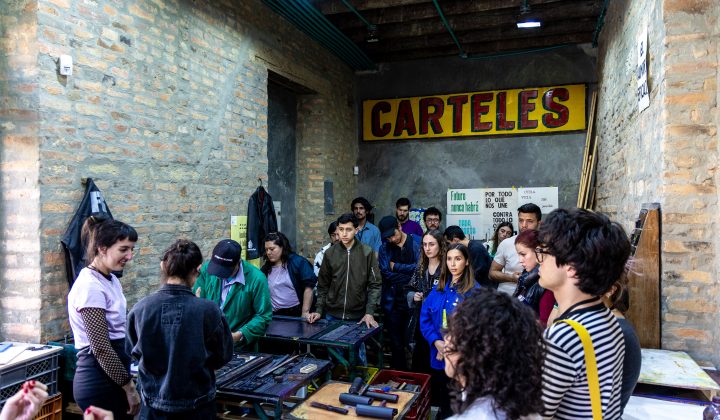
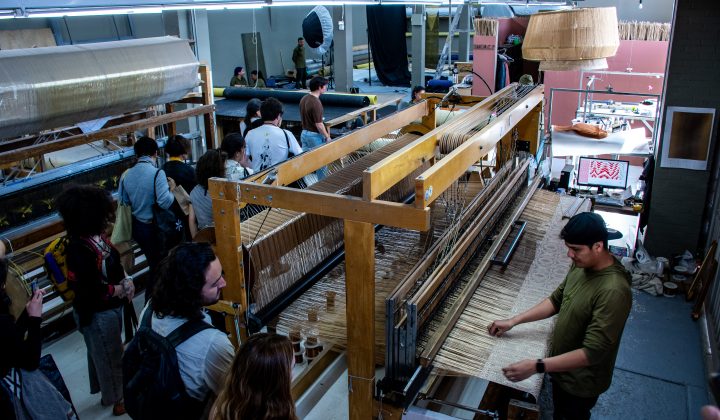
    Pavilion is a three-day international conference in Bogotá, Colombia. It will feature distinguished keynote speakers, offer guided visits to architecture, design, and art studios, performances, host parallel panel discussion sessions, and exhibitions, hold workshops and roundtable discussions. Moreover, Pavilion will have social and cultural events to foster audience integration and encourage discussions on architecture and design-related topics. 

  • Who can attend Pavilion?

    Pavilion is aimed at designers, architects, artists, academics of these fields, and industry representatives. 

  • When is Pavilion taking place?

    October 5th-6th: Pre-conference activities.

    October 7th-9th: Conference. 

  • Which language will Pavilion be in?

    Pavilion’s official languages will be English and Spanish. Projects may be submitted in either of these two languages. 

  • Is there a submission fee?

    Submitting a proposal to the Open Call is free of charge. Projects that are selected to participate in the conference must pay the registration.

  • I am not sure which category to apply to.

    Pavilion’s categories are:

    • Exhibit:
    • Graphic pieces
    • Interactive pieces
    • Audiovisual pieces
    • Objects
    • Perform:
    • Site-specific actions
    • Performed actions
    • Transmedia
    • Present:
    • Extended abstracts
    • Pictorials

    If your work is related to illustration, posters, editorial design, objects, fashion items, prototypes, simulations, architectural models, 3d models, AI, websites, or virtual reality, or similar, you can apply to Exhibit.

    If your project is related to urban interventions, happenings or flash mobs, actions driven by communities, choreographies, scenic artifacts, technological demos, a fashion runway, or similar, you can apply to Perform.

    If your project has a narrative component and combines different formats, you can apply to Transmedia.

    If your project is related to any of the following tracks: resilient communities and habitats, digital spatialities, deconstructing and constructing knowledge, agency and decentralized doing, or materialities, you can apply to Present.

    *Keep in mind that projects may be submitted to more than one category. During the review stage, each category’s chairs will be responsible for (re)assigning the proposal to the category that it is best suited for.

  • Can I apply as a group?

    Yes, there is no limit to the number of authors per project.

  • What if my project is in progress or has already been published?

    Pavilion’s four categories accept projects that are either in progress or have already been published.

  • Can I apply with more than one project?

    Yes, you can submit more than one project. However, for the Exhibit category, please note that if the proposal involves collections or series, you may submit up to five pieces per format.

  • If my project was accepted, can I participate in the conference virtually?

    It is necessary to be present at the conference. If it is a collective project, at least one (1) of the authors must be present at Pavilion.

  • When will I know if my submission has been accepted?

    Notification of acceptance will be sent on June 20th.

  • Will all accepted submissions be part of the proceedings?

    Only projects that have been accepted and registered in Pavilion will be published in the proceedings.

  • Will the proceedings be indexed?

    Pavilion’s proceedings will have ISBN and DOI. Moreover, some proposals will be selected for a special issue of Dearq, a Scopus indexed journal.

  • Is this a non-profit event?

    Yes. Pavilion 2026 is a non-profit event conceived as an academic and cultural platform for reflection, exchange of ideas, and the sharing of knowledge.

  • Who can I contact for more specific information?

    Please contact pabellon@uniandes.edu.co

.......
UNDER CONSTRUCTION